

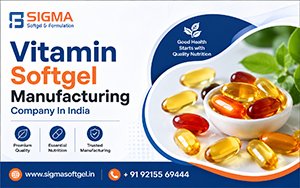
Global demand for softgel capsules has grown fast over the last decade. As a result, India has become one of the most trusted hubs for nutraceutical and pharmaceutical production. Maybe you are a brand owner planning a private-label supplement line. Or perhaps you are a distributor sourcing bulk vitamins, or an entrepreneur exploring the health and wellness space. Either way, finding the right vitamin softgel manufacturing company in India is one of the most important decisions you will make. This guide covers the softgel manufacturing process, what to look for in a partner, and why India remains a top sourcing destination for brands worldwide.
Why the Softgel Format Matters
Softgel capsules are more than a delivery format — they represent real formulation science. Unlike tablets or hard capsules, softgels seal liquid, semi-solid, or oil-based ingredients inside a single shell made from gelatin or a plant-based alternative. Because of this structure, the format suits vitamins and nutritional supplements especially well. Here is why:
- Better bioavailability, since fat-soluble vitamins such as A, D, E, and K absorb more efficiently when suspended in an oil base
- Superior taste masking, because the shell hides unpleasant flavors or odors
- Precise dosing accuracy, since manufacturers measure the liquid fill with high consistency
- Longer shelf stability for oxygen-sensitive ingredients like fish oil or omega-3s
- A smoother, easier swallowing experience compared to large tablets
- An attractive, premium look that appeals to consumers on retail shelves
Thanks to these benefits, softgels have become the preferred format for multivitamins, omega-3 fish oil, vitamin D3, vitamin E, evening primrose oil, garlic oil, and many other nutraceutical products.
Why India Has Become a Global Hub for Softgel Manufacturing
India’s rise as a manufacturing powerhouse did not happen by chance. Several structural advantages have made the country a top choice for brands worldwide that search for softgel manufacturers in India.
1. Strong Regulatory Framework
Indian facilities routinely hold GMP (Good Manufacturing Practices), WHO-GMP, ISO, HACCP, and FSSAI certifications. Many also meet US FDA and European regulatory expectations, so exporters can serve international markets with confidence.
2. Cost-Effective Production Without Compromising Quality
India offers a rare combination: skilled labor, advanced machinery, and competitive raw material sourcing. As a result, a vitamin softgel manufacturing company in India can produce high-quality softgels at price points that Western manufacturing hubs struggle to match, without cutting corners.
3. Access to Raw Materials
India hosts a vast pharmaceutical and nutraceutical supply chain. So manufacturers get reliable access to active vitamin compounds, specialty oils, encapsulating agents, and plasticizers, sourced both domestically and internationally.
4. Skilled Technical Workforce
Every year, India produces a large number of pharmacy, chemistry, and food technology graduates. This steady talent pipeline keeps formulation, quality control, and production teams technically strong.
5. Scalable Production Capacity
Indian facilities run on rotary die encapsulation machines built for both boutique and bulk output. Consequently, they handle everything from small private-label orders to large export contracts.
6. Export-Friendly Ecosystem
Established port infrastructure, pharma-specific logistics providers, and government export incentives all make it easier for international buyers to import finished softgel products smoothly.
The Softgel Manufacturing Process Explained
Understanding how softgels are made helps brand owners grasp the complexity involved. It also helps you ask the right questions when you evaluate a manufacturing partner.
Step 1: Formulation Development
Production starts with the fill material. Here, the active vitamin or nutrient gets blended with a carrier oil, emulsifiers, and stabilizers. Formulation scientists then calculate the correct dosage, solubility, and shell compatibility.
Step 2: Gelatin Mass Preparation
Manufacturers prepare the shell using gelatin, or for vegan softgels, a plant-based alternative like modified starch or carrageenan. They combine this with water, plasticizers such as glycerin or sorbitol, and colorants, then melt and process the mixture into thin, uniform ribbons.
Step 3: Encapsulation
A rotary die encapsulation machine feeds two continuous gelatin ribbons over rotating dies. At the exact moment the dies form the capsule shape, the machine injects the liquid fill between the ribbons, sealing the softgel in one continuous operation.
Step 4: Drying and Tumbling
Freshly formed softgels hold excess moisture, so they pass through a tumble dryer first. Next, they move into controlled drying tunnels or trays, where teams regulate humidity and temperature for 24 to 48 hours to reach the right hardness and shelf stability.
Step 5: Inspection and Sorting
Every batch goes through visual and mechanical inspection to catch defects such as leaks, air bubbles, or seam irregularities. Advanced facilities also use automated optical sorting for extra accuracy.
Step 6: Quality Control Testing
Teams test samples for disintegration time, dissolution rate, fill weight variation, microbial limits, and active ingredient potency. This step confirms that every batch meets label claims and regulatory specifications.
Step 7: Packaging
Finally, workers pack finished softgels into bottles, blister packs, or pouches per client specifications, complete with proper labeling, batch coding, and tamper-evident sealing.
What to Look for in a Vitamin Softgel Manufacturing Company in India
The right manufacturing partner can make or break a supplement brand. So, before you sign a contract, evaluate these key factors:
- Certifications and compliance — Confirm GMP, ISO, HACCP, and FSSAI approvals, plus any export-specific certifications for your target market
- In-house formulation expertise — An experienced R&D team can help you build unique, effective formulations instead of offering only generic blends
- Range of shell options — Check for both gelatin-based and vegetarian or vegan softgel shells to match your product positioning
- Minimum order quantity (MOQ) flexibility — This matters most for startups and smaller brands testing new products
- Customization capabilities — Custom shapes, colors, printing, and packaging help your product stand out on shelves
- Turnaround time — Look for production timelines that fit your launch schedule and inventory planning
- Third-party lab testing — Independent verification of potency and purity builds consumer trust
- Transparent communication — Choose a responsive team that keeps you updated through formulation, production, and shipping
- Track record and client references — Established manufacturers should show proof of previous successful projects
Common Vitamin Softgel Products Manufactured in India
Indian facilities produce a wide catalog of softgel-based nutraceutical products, including:
- Multivitamin and multimineral softgels
- Vitamin D3 softgels
- Vitamin E softgels
- Omega-3 fish oil and flaxseed oil softgels
- Cod liver oil softgels
- Evening primrose oil softgels
- Garlic oil softgels
- CoQ10 softgels
- Biotin softgels
- Combination formulas such as vitamin C with zinc, or calcium with vitamin D3
- Prenatal vitamin softgels
- Joint support formulas with glucosamine and fish oil blends
This broad product range is one reason global brands keep searching for a dependable vitamin softgel manufacturing company in India, rather than building costly in-house production facilities.
Private Label and Contract Manufacturing Advantages
Many businesses entering the supplement space choose private label or contract manufacturing instead of building their own plants. This approach offers several strategic benefits:
- Lower upfront capital investment compared to setting up a manufacturing facility
- Faster time to market, since production infrastructure already exists
- Access to formulation expertise without hiring an in-house R&D team
- Flexibility to test multiple products before committing to large production runs
- Reduced regulatory burden, since compliant manufacturers already hold the necessary certifications
- More time to focus on branding, marketing, and distribution
So, if you are exploring softgel manufacturers in India for a private label partnership, request sample batches, review certificates of analysis, and visit or virtually tour the facility before you finalize anything.
Sourcing Through Sigmasoftgel.in
Among the manufacturers operating in this space, sigmasoftgel.in reflects the kind of facility brand owners typically look for. It combines formulation know-how with production infrastructure suited to both domestic and export orders. Before you commit to a bulk order with a partner like sigmasoftgel.in, review their certifications, request sample formulations, and discuss customization options for shell type, fill composition, and packaging. A structured onboarding conversation covering your target dosage, ingredient sourcing preferences, and expected order volumes will help the partnership start on solid ground.
Quality Standards Every Buyer Should Verify
Before you finalize any manufacturing agreement, independently confirm the following:
- Valid GMP and ISO certification numbers, which you can usually verify through the issuing body
- FSSAI license status for facilities operating within India
- Availability of a Certificate of Analysis (CoA) for each production batch
- Stability testing data that supports the claimed shelf life
- Heavy metal and microbial testing reports
- Traceability documentation for raw material sourcing
- Compliance with labeling regulations for your destination market
The Future of Softgel Manufacturing in India
India’s nutraceutical industry will likely keep expanding as domestic consumption rises alongside export demand from North America, Europe, the Middle East, and Southeast Asia. Meanwhile, manufacturers keep investing in:
- Plant-based and vegan softgel shell technology to meet changing consumer preferences
- Sustainable packaging solutions that reduce environmental impact
- Automation and digital quality control systems for greater consistency
- Novel delivery formats such as mini-softgels and chewable softgels
- Clean-label formulations free from artificial colors and unnecessary additives
Given these trends, a well-established vitamin softgel manufacturing company in India looks well positioned to stay a reliable, long-term sourcing partner for global supplement brands.
Frequently Asked Questions
Manufacturing and Process Questions
- What is the minimum order quantity for softgel manufacturing in India? MOQs vary by manufacturer and depend on formulation complexity. Still, many facilities offer flexible MOQs for both startups and established brands, so confirm directly with your chosen manufacturer.
- How long does it take to manufacture a batch of vitamin softgels? Timelines typically run from a few weeks to a couple of months. This depends on formulation complexity, batch size, drying time, and quality testing requirements.
- Can I get a vegetarian or vegan softgel option? Yes. Many Indian manufacturers now offer plant-based shell alternatives, made from modified starch or carrageenan instead of gelatin, to serve vegetarian and vegan consumers.
- Are Indian softgel manufacturers compliant with international regulations? Reputable facilities maintain GMP, ISO, HACCP, and FSSAI certifications. Many also align with US FDA and European regulatory expectations, which makes them suitable for export markets.
- Can I customize the shape, color, and printing of my softgels? Most established manufacturers offer customization for capsule shape, color, transparency, and surface printing, so your product can stand out on shelves.
Quality and Sourcing Questions
- What ingredients are commonly used in vitamin softgels? Common fill ingredients include fat-soluble vitamins such as A, D, E, and K, along with oils like fish oil, flaxseed oil, and evening primrose oil. Manufacturers usually combine these with carrier oils and emulsifiers for stability.
- How do I verify the quality of a softgel manufacturer before placing a bulk order? Request certifications, a Certificate of Analysis for sample batches, and third-party lab testing reports. If possible, also arrange a facility visit or virtual tour before you commit to a large production run.
- Is it cost-effective to manufacture vitamin softgels in India compared to other countries? Yes, generally. India’s skilled labor, efficient raw material sourcing, and established manufacturing infrastructure allow for competitive pricing, without compromising regulatory compliance or product quality.
Final Thoughts
Selecting the right vitamin softgel manufacturing company in India requires careful evaluation of certifications, formulation expertise, production capacity, and quality assurance practices. As global demand for high-quality nutraceuticals keeps rising, India’s manufacturing ecosystem — backed by skilled talent, cost efficiency, and regulatory compliance — remains a compelling choice for brands bringing vitamin softgel products to market. So whether you are launching your first supplement line or scaling an established brand, an experienced and transparent manufacturing partner will set the foundation for consistent quality and long-term success.
 Home
Home Ask For Rate
 Call Us
 Whatsapp