

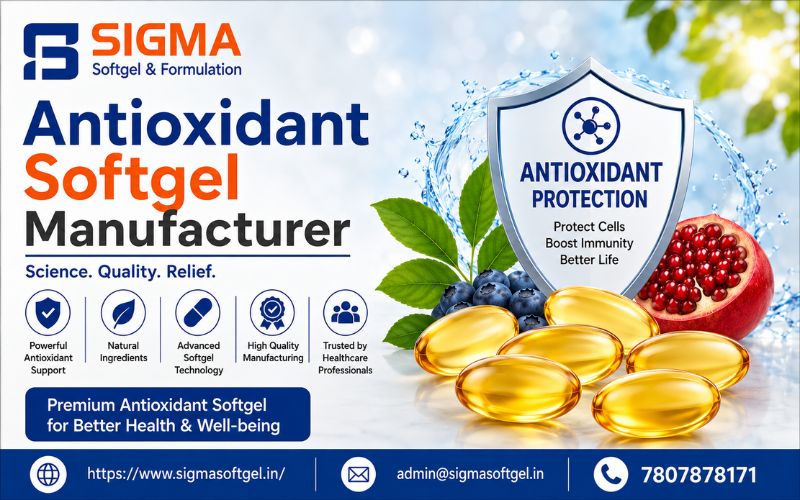
In the modern health and wellness era, the global consumer is no longer just looking for “supplements”; they are looking for longevity and cellular protection. As oxidative stress becomes a recognized catalyst for chronic illness and premature aging, the demand for high-potency antioxidants has reached an all-time high. Consequently, for brand owners and pharmaceutical entrepreneurs, finding the right Antioxidant Softgel Manufacturer is the most critical step in building a credible, high-growth product line.
This guide explores why softgel technology is the superior delivery system for antioxidants, the technical intricacies of the manufacturing process, and how you can select a partner that ensures your brand ranks at the top of the market.
Why the Global Market for Antioxidants is Exploding
The rise of preventative healthcare is driving the global antioxidant market toward unprecedented valuations. Today’s consumers are more informed than ever about “free radicals”—the unstable molecules that damage cells. Factors such as rising pollution, UV radiation, processed diets, and high-stress lifestyles have made antioxidant supplementation a daily necessity rather than a luxury.
However, the market is also becoming more discerning. Buyers are moving away from chalky, hard-to-swallow tablets in favor of premium delivery formats. This is precisely where an expert antioxidant softgel manufacturer provides a competitive edge. By offering a product that looks professional, feels premium, and works faster, you position your brand in the high-end “nutraceutical” segment.
The Science of Softgels: Why They Outperform Tablets
When it comes to antioxidants like Coenzyme Q10 (CoQ10), Vitamin E, or Astaxanthin, the delivery format determines the product’s success. Therefore, most industry leaders prioritize softgels over traditional capsules or tablets for several scientific reasons.
1. Enhanced Bioavailability and Absorption
Many of the most powerful antioxidants are lipophilic, meaning they are fat-soluble. In a traditional tablet, these ingredients struggle to dissolve in the gut, leading to poor absorption. In contrast, a softgel manufacturer dissolves the active pharmaceutical ingredient (API) in a lipid-based carrier oil. Because the medicine is already in a liquid state, the body can absorb it almost immediately upon the dissolution of the gelatin shell. This “fast-acting” nature is a primary selling point that improves customer retention.
2. Protection Against Oxidation and Light
The irony of antioxidants is that they are often highly sensitive to the very things they fight: oxygen and light. Vitamin C and Glutathione, for example, can degrade quickly when exposed to the air. The airtight, hermetic seal of a softgel provides an impenetrable barrier. This ensures that the product remains potent from the day it is manufactured until the day the consumer takes it, effectively extending the shelf life and protecting your brand’s reputation.
3. Precision Dosing and Uniformity
Manufacturing a high-quality antioxidant requires extreme precision, especially for ingredients that are effective in very small doses (like Selenium or Lycopene). Softgel technology allows for a high degree of “content uniformity.” Each capsule contains an exact liquid volume, ensuring that every customer receives the precise dosage promised on your label.
Inside the Facility: The Manufacturing Process of Antioxidant Softgels
Understanding the manufacturing journey is essential for any brand owner who wants to guarantee quality. A top-tier Antioxidant Softgel Manufacturer follows a rigorous, multi-stage process that balances chemistry with mechanical precision.
Step 1: Gel Mass Preparation
The process begins with the “Gel Mass.” Manufacturers mix high-quality gelatin (or plant-based alternatives like carrageenan) with plasticizers like glycerin and purified water. They heat this mixture in large stainless steel reactors under a vacuum. This vacuum stage is vital because it removes air bubbles that could otherwise cause the capsules to leak or look cloudy.
Step 2: Medicated Fill Preparation
Simultaneously, pharmacists prepare the antioxidant blend. Whether you are producing a single-ingredient Astaxanthin softgel or a complex “Multivitamin with Antioxidant” blend, the ingredients must be perfectly homogenized. If the API is not distributed evenly in the carrier oil, the capsules will fail quality tests. Therefore, manufacturers use high-shear mixers to create a stable, uniform suspension.
Step 3: Rotary Die Encapsulation
This is the heart of the operation. Two ribbons of gelatin pass through a set of rotating dies. As the dies meet, they form the shape of the capsule. At that exact millisecond, a precision pump injects the liquid antioxidant fill into the center. The heat and pressure of the dies seal the capsule instantly. This process requires a master technician, as even a minor misalignment can result in “leakers.”
Step 4: The Drying Phase (The “Secret” to Quality)
Freshly made softgels are delicate and moist. Consequently, they must undergo a multi-stage drying process. First, they spend time in “tumble dryers” for initial set-up. Afterward, they move to drying tunnels where controlled airflow and humidity levels (often kept below 20%) finish the process over 24 to 72 hours. Proper drying is what gives a softgel its perfect “snap” and prevents it from sticking to other capsules in the bottle.
Key Ingredients Your Manufacturer Should Offer
A versatile manufacturer should have the expertise to work with a wide variety of antioxidant APIs. Depending on your target audience—whether it’s “Skin Health,” “Heart Health,” or “Anti-Aging”—you might consider the following:
- Coenzyme Q10 (CoQ10): Essential for heart health and energy production. It is notoriously hard to absorb, making the softgel format a non-negotiable requirement for this ingredient.
- Astaxanthin: Often called the “King of Antioxidants,” it is 6,000 times more powerful than Vitamin C. Because it is highly sensitive to light, it requires the protective shell of a softgel.
- Glutathione: Known as the “Master Antioxidant,” it is popular in the beauty and skin-brightening market. A manufacturer must ensure it is stabilized to prevent the “sulfur” smell often associated with it.
- Lutein and Zeaxanthin: Critical for eye health (blue light protection). These are usually formulated in an oil base, which fits perfectly into the softgel model.
- Omega-3 with Vitamin E: Many brands combine antioxidants with healthy fats to create a synergistic effect for brain and heart health.
The Strategic Importance of Third-Party Manufacturing (CDMO)
Setting up a softgel production line costs millions of dollars in machinery and HVAC systems. Therefore, most successful brands utilize a Contract Development and Manufacturing Organization (CDMO) model. By partnering with an established manufacturer, you gain several strategic advantages:
- Cost Optimization: You avoid the massive capital expenditure of building a factory. Instead, you pay for the product and the expertise, allowing you to focus your budget on marketing and distribution.
- Regulatory Peace of Mind: A professional manufacturer handles all the “red tape.” They ensure the product meets WHO-GMP standards and local regulatory requirements like the CDSCO or FSSAI.
- Scalability: If your product goes viral and demand spikes, a large manufacturer can scale production from 100,000 to 1,000,000 capsules quickly, ensuring you never face “out of stock” issues.
Quality Control: The Non-Negotiables for Google Ranking and Consumer Trust
In the pharmaceutical world, “Quality” is not just a buzzword; it is a legal requirement. If your product fails, your brand dies. Therefore, you must ensure your manufacturer performs the following tests on every batch:
- Dissolution and Disintegration Testing: This proves that the capsule will actually break down and release the antioxidant in the human stomach at the right time.
- Assay Testing: This confirms that the amount of antioxidant listed on the label is actually inside the capsule.
- Microbial Limit Testing: This ensures the product is 100% free from pathogens, mold, or bacterial contamination.
- Heavy Metal Analysis: Since many antioxidants are sourced from natural plants or marine life, it is essential to test for lead, mercury, and arsenic to ensure safety.
Future Trends in Antioxidant Softgel Manufacturing
The industry is moving toward “cleaner” and more specialized products. If you want your brand to stay ahead of the curve, discuss these trends with your manufacturer:
1. Plant-Based (Vegan) Softgels
Traditionally, gelatin is sourced from bovine or porcine origins. However, the rise of veganism has created a massive demand for carrageenan-based or starch-based shells. Offering a “Vegan Antioxidant Softgel” can immediately double your target market.
2. Enteric Coating
Some antioxidants can cause stomach upset or “burp-back” (especially if they contain fish-oil carriers). An enteric-coated softgel passes through the stomach and dissolves in the small intestine, providing a much more comfortable experience for the user.
3. “Clean Label” Ingredients
Consumers are increasingly avoiding artificial colors like Titanium Dioxide. Many modern manufacturers are now using natural colorants derived from beetroot, chlorophyll, or turmeric to give softgels their vibrant hues.
How to Choose the Right Manufacturing Partner
When you are ready to launch your product, don’t just choose the cheapest quote. Instead, evaluate potential partners based on the following:
- Certifications: Do they have WHO-GMP, ISO, or FSSAI certifications?
- R&D Support: Can they help you create a unique formula, or do they only offer “stock” recipes?
- Transparency: Are they willing to show you their facility or provide COAs (Certificates of Analysis) for every batch?
- Lead Times: Can they deliver your product in 30–45 days, or are they consistently behind schedule?
Conclusion: Elevating Your Brand with the Right Partner
The journey to becoming a market leader in the supplement industry is paved with quality. An Antioxidant Softgel Manufacturer is more than just a supplier; they are the foundation of your business. By choosing a partner that prioritizes bioavailability, stability, and regulatory compliance, you ensure that your customers receive a product that truly improves their health.
In a crowded marketplace, the superior performance and premium feel of a liquid-filled softgel will always stand out. As oxidative health continues to dominate consumer interest, now is the perfect time to invest in a product line that delivers on its promises.
Are you ready to bring a world-class antioxidant to the market? Our manufacturing experts are here to help you navigate everything from formulation to final packaging. Contact us today to learn how our state-of-the-art facility can help you scale your brand and achieve the market rankings you deserve.
Frequently Asked Questions (FAQs)
Q1: What is the typical shelf life of an antioxidant softgel? Most antioxidant softgels have a shelf life of 24 to 36 months. However, this depends on the specific API and the quality of the airtight seal provided by the manufacturer.
Q2: Can I manufacture “Veggie” antioxidant softgels? Yes. Many advanced manufacturers now offer plant-based shells made from seaweed extract (carrageenan) or modified starch to cater to vegan and vegetarian consumers.
Q3: Why are softgels more expensive than tablets? The encapsulation process is significantly more complex and requires specialized machinery, high-grade gelatin, and precise environmental controls. However, the higher retail price and consumer preference usually result in better profit margins for your brand.
Q4: How do I know if my manufacturer is using high-quality antioxidants? You should always request a “Certificate of Analysis” (COA) for the raw materials they source. A reputable manufacturer will only work with vetted suppliers who provide pure, contaminant-free ingredients.
Q5: What is the minimum order quantity (MOQ) for softgel manufacturing? MOQs vary, but most professional units require a minimum of 100,000 to 300,000 capsules per batch to maintain production efficiency and cost-effectiveness.

 Home
Home Ask For Rate
 Call Us
 Whatsapp