

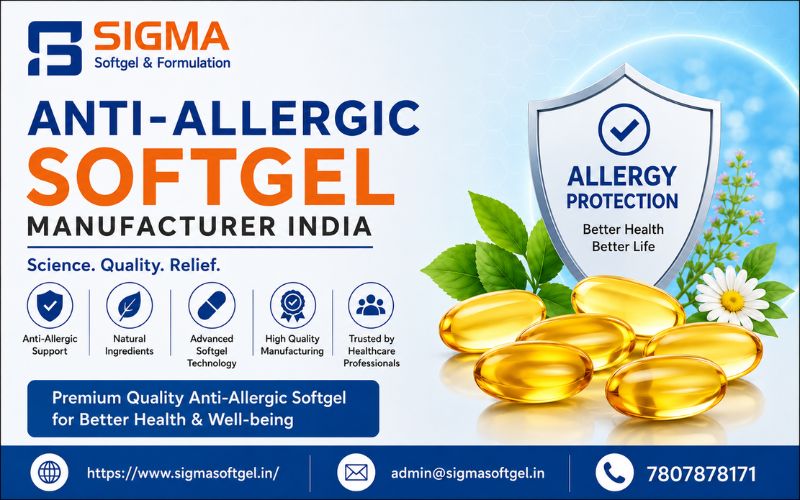
In the current global health climate, the pharmaceutical industry in India has solidified its position as the “Pharmacy of the World.” This reputation is not merely a result of volume but stems from a relentless pursuit of innovation and quality standards. Specifically, within the respiratory and immunology sectors, the demand for high-quality allergy relief has skyrocketed. If you are looking for a reliable Anti-Allergic Softgel Manufacturer in India, you are navigating a market that offers a unique blend of cost-efficiency and world-class technical expertise.
This detailed guide explores why softgel technology is dominating the allergy market, how the manufacturing process ensures efficacy, and why partnering with an Indian manufacturer provides a distinct competitive advantage for your brand.
The Rising Global Demand for Allergy Solutions
Allergies are no longer just seasonal inconveniences; they have become a year-round health concern for millions globally. Factors such as rising pollution levels, climate change-induced pollen shifts, and urban lifestyle changes have led to a surge in allergic rhinitis, urticaria, and various dermatological reactions.
Consequently, pharmaceutical brands are shifting their focus toward dosage forms that offer faster relief. While traditional tablets served the market for decades, the modern consumer demands a premium experience. This is where the Anti-Allergic Softgel Manufacturer in India plays a pivotal role. By converting standard antihistamines into liquid-filled soft gelatin capsules, manufacturers provide a product that acts faster and feels more premium to the end-user.
Why Softgels are the Gold Standard for Allergy Relief
When a patient suffers from an acute allergic reaction—be it relentless sneezing or itchy hives—every minute counts. Softgel technology addresses these pain points more effectively than any other oral dosage form.
1. Rapid Absorption and Bioavailability
Softgels contain active pharmaceutical ingredients (APIs) already dissolved or suspended in a lipid-based liquid. Therefore, when the patient swallows the capsule, the body does not need to spend time breaking down a hard-pressed tablet. Instead, the gelatin shell dissolves quickly, releasing the liquid medication for immediate absorption. For medications like Cetirizine or Fexofenadine, this rapid onset of action is a critical selling point that helps a brand stand out.
2. Enhanced Stability for Sensitive APIs
Many anti-allergic compounds are sensitive to light and oxygen. The airtight seal of a softgel shell provides an excellent barrier, protecting the liquid fill from oxidation and degradation. In addition, the encapsulation process allows for precise dosing, ensuring that even low-dose APIs are distributed uniformly throughout the batch.
3. High Patient Compliance
Patients generally prefer softgels because they are easier to swallow. The smooth, flexible exterior becomes slippery when wet, reducing the “throat friction” associated with chalky tablets. Furthermore, the encapsulation completely masks the bitter taste of antihistamines, which significantly improves the user experience for both adults and children.
The Technical Edge: How an Anti-Allergic Softgel Manufacturer in India Operates
Manufacturing a softgel is significantly more complex than pressing a tablet. It requires a sophisticated synergy between chemistry and mechanical engineering. A leading Indian manufacturer utilizes high-speed Rotary Die Encapsulation technology to achieve consistent results.
The Formulation Process
The process begins with the preparation of the two main components: the gel mass and the medicated fill.
- Gel Mass Preparation: Engineers mix high-quality gelatin with plasticizers like glycerin or sorbitol and purified water. They heat this mixture in a stainless steel reactor under a vacuum to remove air bubbles.
- Fill Material Preparation: Simultaneously, pharmacists prepare the anti-allergic solution. Specifically, they must ensure the API is perfectly homogenized in the carrier oil or PEG (Polyethylene Glycol) to ensure every capsule contains the exact therapeutic dose.
Encapsulation and Ribbon Formation
During encapsulation, two ribbons of gelatin pass through rotating dies. As these dies meet, they form the capsule shape. At the exact millisecond of closure, a precision pump injects the medicated fill. This “simultaneous” action is what makes softgel manufacturing a high-precision art. Any misalignment can lead to “leakers,” which is why top-tier Indian manufacturers invest in automated vision inspection systems to maintain a 0% defect rate.
The Critical Drying Phase
Freshly formed softgels are delicate and contain high moisture. Therefore, they must undergo a multi-stage drying process. First, they enter tumble dryers for initial set-up. Following this, they move to drying tunnels where controlled airflow and humidity levels (often below 20%) finish the process over 24 to 72 hours. This step is vital for ensuring the shell’s shelf-life and preventing “sticking” in the final packaging.
Strategic Advantages of Choosing a Manufacturer in India
India has become the preferred hub for contract manufacturing (CDMO) for several logistical and economic reasons.
1. Cost-Effectiveness without Compromise
Operating costs in India are significantly lower than in Western Europe or North America. However, this does not mean a drop in quality. Instead, it allows brands to allocate more budget toward marketing and distribution while still receiving a product manufactured in a state-of-the-art facility.
2. World-Class Regulatory Compliance
The best Anti-Allergic Softgel Manufacturers in India operate under strict international guidelines. Most top-tier facilities are certified by the Central Drugs Standard Control Organization (CDSCO) and adhere to WHO-GMP standards. Many also hold USFDA or EU-GMP approvals, allowing brands to export their products to highly regulated global markets with confidence.
3. Robust Supply Chain and R&D
India possesses a vast ecosystem of raw material suppliers. From high-bloom gelatin to the APIs themselves, most components are sourced locally, which reduces lead times and protects the production schedule from global shipping disruptions. Furthermore, Indian manufacturers often have dedicated R&D wings that can help you develop “unique” formulas, such as combining an antihistamine with a decongestant or a natural extract like Quercetin.
Key Ingredients in Modern Anti-Allergic Formulations
A versatile manufacturer can work with a wide range of APIs. Depending on your target market, you might consider the following active ingredients for your softgel line:
- Cetirizine HCl: A second-generation antihistamine known for providing 24-hour relief with minimal drowsiness.
- Levocetirizine Dihydrochloride: A more potent derivative of Cetirizine that is highly effective for allergic rhinitis.
- Fexofenadine HCl: A non-sedating antihistamine that is widely popular in premium markets.
- Loratadine: Excellent for long-term allergy management due to its non-drowsy profile.
- Diphenhydramine: Often used in “night-time” allergy formulas because of its sedative properties.
Quality Control: The Non-Negotiables
When you partner with a manufacturer, your brand’s reputation is in their hands. Therefore, you must ensure they perform the following tests on every batch:
- Dissolution Testing: Does the capsule release the drug at the right rate in the stomach?
- Assay and Impurity Profile: Is the drug concentration exact, and is the product free from degradation products?
- Microbial Limit Testing: Is the facility sterile enough to prevent bacterial or fungal contamination?
- Shell Thickness and Hardness: Is the capsule durable enough for blister packaging and shipping?
The Future of Allergy Softgels: Trends to Watch
The industry is currently moving toward “clean label” and specialized delivery systems. As a result, we are seeing a rise in Veggie Softgels (made from carrageenan or starch) to cater to vegan and vegetarian demographics. Moreover, the integration of “Liquid-in-Hard-Gel” technology and multi-compartment capsules is beginning to emerge, allowing for even more complex ingredient combinations.
Another growing trend is the “Combo-Pack” strategy. Manufacturers are now producing daytime (non-drowsy) and nighttime (sedative) formulas within the same blister pack to provide 24-hour care for the patient.
Conclusion: Securing Your Market Position
The allergy market is competitive, but it offers immense rewards for brands that prioritize quality and patient experience. By choosing an expert Anti-Allergic Softgel Manufacturer in India, you gain access to high-tech production capabilities, regulatory assurance, and significant cost advantages.
Ultimately, your success depends on the reliability of your supply chain. A partner who understands the nuances of softgel stability and who can scale production during peak allergy seasons will be your greatest asset. As the global demand for fast-acting relief continues to grow, now is the time to elevate your product line with the superior performance of liquid-filled softgels.
Are you ready to launch a market-leading allergy product? Our team of experts is dedicated to pharmaceutical excellence and transparent communication. Contact us today to learn how our Indian manufacturing facility can help you achieve your goals and provide patients with the relief they deserve.
Frequently Asked Questions (FAQs)
Q1: Why is India considered a leader in softgel manufacturing? India combines a massive pool of skilled pharmaceutical scientists with advanced manufacturing infrastructure. The country’s ability to meet global regulatory standards while maintaining cost-efficiency makes it the primary choice for contract manufacturing.
Q2: What is the typical lead time for a custom softgel order? For most manufacturers in India, the lead time ranges from 30 to 45 days. This includes the time required for raw material sourcing, production, quality testing, and final packaging.
Q3: Can I customize the shape and color of my anti-allergic softgels? Absolutely. Manufacturers offer various shapes (oval, oblong, round) and can customize the shell color to align with your brand identity. You can also choose between transparent, opaque, or even pearlescent finishes.
Q4: How do I verify the quality of an Indian manufacturer? You should always request to see their WHO-GMP and ISO certifications. Additionally, conducting a site audit or hiring a third-party auditor to inspect the facility is a standard practice for international brands.
Q5: Are anti-allergic softgels more expensive to produce than tablets? The initial production cost per unit is slightly higher due to the complex encapsulation process and the cost of gelatin. However, the higher retail price and increased consumer preference often lead to better profit margins for the brand owner.




 Home
Home Ask For Rate
 Call Us
 Whatsapp