

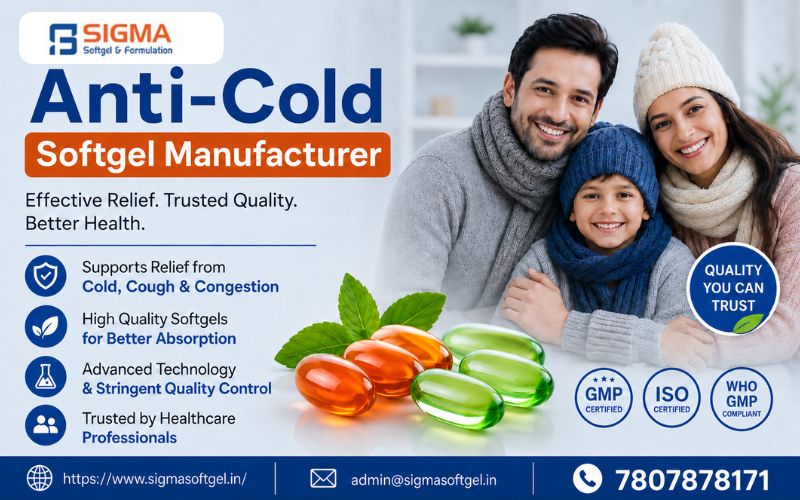
In today’s rapidly evolving global pharmaceutical landscape, the demand for effective, fast-acting, and consumer-friendly cold remedies is at an all-time high. As seasonal changes bring about the inevitable rise in viral infections, the pharmaceutical market sees a massive surge in demand for over-the-counter (OTC) solutions. Among these, soft gelatin capsules—commonly known as softgels—have emerged as a preferred choice for both patients and healthcare providers.
Choosing the right Anti-Cold Softgel Manufacturer is a critical decision for any pharmaceutical brand looking to capture market share. This blog post dives deep into the world of softgel manufacturing, exploring why this dosage form is superior, how the manufacturing process works, and what you should look for in a manufacturing partner to ensure your brand stands out on the shelves.
Why the Market is Shifting Toward Anti-Cold Softgels
For decades, tablets and traditional hard shells were the standard for cold and flu medication. However, consumer preferences have evolved. Today’s patient is looking for more than just relief; they are looking for a seamless experience.
1. Superior Bioavailability and Pharmacokinetics
Softgels are essentially liquid-filled capsules. Because the active ingredients are already in a solubilized state (either dissolved or suspended in oil or other liquids), the body can absorb them much faster than a solid tablet that must first disintegrate in the stomach. For a patient suffering from a throbbing headache or a blocked nose, those extra 15–20 minutes saved in absorption time make a world of difference. Specifically, this rapid onset of action is a primary selling point for premium anti-cold brands.
2. Ease of Consumption
One of the biggest complaints regarding cold medication is the “pill fatigue” or the difficulty of swallowing large, chalky tablets. Softgels have a smooth, flexible exterior that becomes slippery when in contact with saliva, making them significantly easier to swallow. This user-centric design increases patient compliance, especially among those who struggle with traditional medicine formats.
3. Masking Unpleasant Tastes
Many active pharmaceutical ingredients (APIs) used in anti-cold formulations, such as Paracetamol or Guaifenesin, have an incredibly bitter taste. Softgels encapsulate these ingredients completely, providing a tasteless and odorless experience for the consumer.
The Role of a Leading Anti-Cold Softgel Manufacturer
A specialized manufacturer does more than just “make pills.” They act as an extension of your brand’s R&D and quality assurance departments. A high-quality manufacturer brings technical expertise to the table, ensuring that the final product is stable, potent, and safe.
Formulation Expertise
An Anti-Cold Softgel often contains a complex “cocktail” of ingredients. These might include:
- Analgesics/Antipyretics: To reduce fever and pain.
- Decongestants: To clear nasal passages.
- Antihistamines: To stop runny noses and sneezing.
- Antitussives: To suppress coughing.
Combining these into a stable liquid fill requires deep chemical knowledge. A top-tier manufacturer ensures that these ingredients do not react with the gelatin shell (migration) or degrade over time.
Cutting-Edge Technology
Manufacturing softgels is a high-precision task. It requires sophisticated rotary die encapsulation machines. The manufacturer must maintain strict control over temperature and humidity, as gelatin is highly sensitive to environmental conditions.
The Step-by-Step Manufacturing Process of Anti-Cold Softgels
Understanding the manufacturing process is vital for any brand owner. It helps you appreciate the quality checkpoints that go into every single batch.
Step 1: Gelatin Preparation
The process begins with the ‘Gel Mass’ preparation. A mixture of gelatin, plasticizers (like glycerin or sorbitol), and purified water is heated in a stainless steel tank under a vacuum. This creates a thick, syrupy liquid that will eventually form the shell of the capsule. Colorants and opacifiers are added at this stage to give the softgel its signature look.
Step 2: Fill Material Preparation
While the gel mass is being prepared, the ‘Medicated Fill’ is processed in a separate tank. For anti-cold remedies, this is usually an oily or PEG-based solution containing the active drugs. This mixture must be homogenized to ensure that every single capsule contains the exact dosage required by law.
Step 3: Encapsulation
The process involves the simultaneous formation of the gelatin ribbon and the precision injection of the API fill. Two ribbons of gelatin are fed through a set of rotating dies. As the dies meet, they form the shape of the capsule. Simultaneously, a precision pump injects the liquid fill into the pocket just before it is sealed shut by heat and pressure.
Step 4: Drying
Freshly made softgels are very soft and contain a high percentage of moisture. They are first placed in tumble dryers to remove surface moisture and then moved to drying tunnels on trays. This process can take anywhere from 24 to 72 hours, depending on the formulation.
Step 5: Inspection and Quality Control
A reputable Anti-Cold Softgel Manufacturer doesn’t stop at drying. Every batch undergoes rigorous testing:
- Disintegration tests: Ensuring the shell breaks down at the right time.
- Assay testing: Verifying the amount of active medicine.
- Microbial testing: Ensuring the product is free from bacteria or mold.
- Physical inspection: Removing any leaked or misshapen capsules.
Key Ingredients in Effective Anti-Cold Formulations
When you collaborate with a manufacturer, you need to decide on the “recipe.” Most high-performance anti-cold softgels utilize a combination of the following:
- Paracetamol (Acetaminophen): The gold standard for pain and fever relief.
- Phenylephrine HCl: A powerful decongestant that shrinks swollen blood vessels in the nasal passages.
- Chlorpheniramine Maleate: An antihistamine that manages symptoms like watery eyes and sneezing.
- Dextromethorphan HBr: A cough suppressant that works on the brain’s cough reflex.
- Caffeine: Often added to daytime formulas to counteract the drowsiness caused by antihistamines and to boost the pain-relieving effects of paracetamol.
How to Choose the Best Anti-Cold Softgel Manufacturer
With so many players in the market, how do you differentiate a mediocre manufacturer from a world-class partner? Here are the non-negotiables:
1. WHO-GMP and ISO Certifications
Compliance is everything in pharma. Ensure your partner is World Health Organization – Good Manufacturing Practices (WHO-GMP) certified. This ensures that the products are consistently produced and controlled according to quality standards.
2. Research and Development (R&D) Capabilities
The pharmaceutical market is constantly changing. You want a manufacturer that can help you innovate. Can they offer “Sugar-Free” softgels? Can they create “Vegetarian” or “Vegan” shells? A partner with strong R&D helps future-proof your brand.
3. Scalability and Lead Times
A common problem in the cold and flu season is “Out of Stock” scenarios. Your manufacturer must have the capacity to scale up production during peak months and deliver orders within a reasonable timeframe (typically 30–45 days).
Strategic Advantages of Third-Party Manufacturing
Many brands choose a third-party or contract manufacturing model rather than setting up their own units. The reasons are largely economic:
- Cost Efficiency: You don’t need to invest millions in heavy machinery or specialized HVAC systems.
- Focus on Marketing: While the manufacturer handles the technicalities, you can focus on building your brand, distribution network, and marketing campaigns.
- Expertise Access: You benefit from the manufacturer’s years of experience and their specialized team of pharmacists and chemists.
The Future of Anti-Cold Softgels
We are seeing exciting trends in the softgel space. “Combo-packs” (Day and Night formulas in one blister pack) are becoming the industry standard. Furthermore, there is a push toward “Clean Label” softgels—removing artificial dyes and replacing them with natural colors.
Another emerging trend is the integration of natural extracts. Many brands are now asking manufacturers to create ‘Hybrid Softgels’ that combine traditional APIs with Ginger, Tulsi (Holy Basil), or Vitamin C to appeal to the wellness-conscious consumer.
Conclusion: Partnering for Success
The market for anti-cold remedies is crowded, but there is always room at the top for products that deliver on their promise. By partnering with an expert Anti-Cold Softgel Manufacturer, you ensure that your product is not just another box on the pharmacy shelf, but a reliable solution that helps people feel better, faster.
Quality manufacturing is the foundation of consumer trust. When a patient takes a softgel and feels their congestion clearing up within minutes, you’ve earned a customer for life. As you look toward the next cold and flu season, prioritize quality, compliance, and innovation in your manufacturing choices.
Are you ready to elevate your pharmaceutical brand? Don’t let the next seasonal peak catch you unprepared. Contact our expert team today to discuss how our manufacturing excellence can scale your product line and secure your place as a market leader.
Frequently Asked Questions (FAQs)
Q1: What is the shelf life of Anti-Cold Softgels? Typically, softgels have a shelf life of 2 to 3 years, provided you store them in a cool, dry place away from direct sunlight.
Q2: Can softgels be customized in different colors? Yes. Manufacturers can create custom colors and even two-tone capsules to help with brand recognition and to distinguish between daytime and nighttime formulas.
Q3: Are softgels suitable for all ages? While softgels are easier to swallow than tablets, they are generally recommended for adults and older children. For very young children, parents often prefer liquid syrups to avoid choking hazards.
Q4: What is the minimum order quantity (MOQ) for contract manufacturing? MOQs vary by manufacturer but usually start around 100,000 to 300,000 capsules per batch to ensure production efficiency.
 Home
Home Ask For Rate
 Call Us
 Whatsapp